A quiet existential crisis is sweeping through the digital publishing landscape. If you open any webmaster forum, Reddit communities like r/blogging, or tech twitter, the sentiment is overwhelmingly apocalyptic. Content creators who spent a decade building organic search traffic are watching their analytics dashboards plummet into a vertical freefall.
The question isn’t just rhetorical anymore; it’s financial, structural, and urgent: Is blogging dead in 2026?
The short answer is no. But the nuance is brutal: The traditional model of blogging, which relies on programmatic, informational, search-arbitrage engines, is functionally extinct.
If your strategy relies on targeting low-competition informational keywords, spinning up a 1,000-word summary, and expecting Google to send you free traffic that you can monetize with programmatic display ads, you are chasing a ghost.
To understand why blogging isn’t dead, but why it has radically evolved, we need to dissect the structural shifts of 2026, analyze the collapse of traditional SEO, and chart the exact operational framework required to survive this new epoch of the internet.
1. The Anatomy of the Collapse: Why Traditional Blogging Died
To understand how to build a successful blog today, we must first perform an autopsy on what died. The extinction of traditional blogging is driven by three compounding architectural shifts in how humans and machines consume information.
Shift A: The Zero-Click Search Economy and AI Overviews
For twenty years, the contract between Google and bloggers was simple: We give Google high-quality content to index, and Google gives us targeted user traffic.
In 2026, that contract has been unilaterally torn up.
With the complete integration of advanced Retrieval-Augmented Generation engines natively into search engines, Google’s AI Overviews and Bing’s deep search capabilities act as an information sponge.
[Traditional Search Flow]
User Query ──> Search Engine ──> Clicks Link ──> Blog (Monetized via Ads/Affiliate)

[2026 Search Flow]
User Query ──> AI Overview (Scrapes Blog) ──> Formulates Direct Answer ──> User Leaves (Zero-Click)
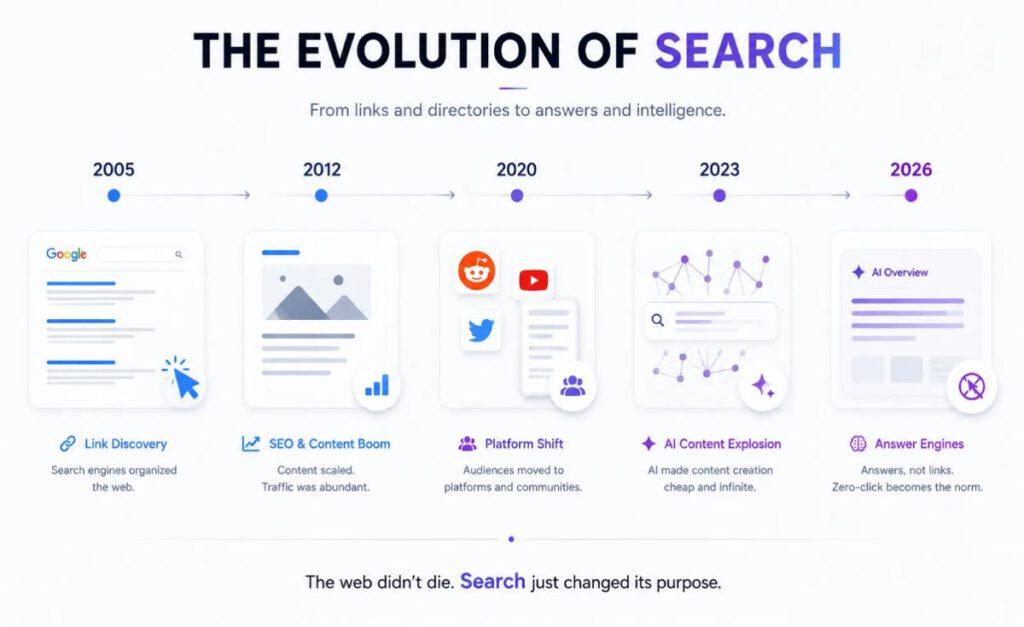
When a user searches for how progressive tax slabs work for government employees in Nepal or what the formula is for calculating a Nijamati pension, the search engine doesn’t just list ten blue links. It actively ingests the top articles, computes the answer using an underlying LLM, and presents a comprehensive, formatted, zero-click response directly on the search engine results page. The user gets their answer in 4 seconds and closes the tab. The blog that originally hosted the data gets zero traffic, zero ad impressions, and zero affiliate clicks.
Shift B: The Commodity of Information
Before the generative AI boom, information had asymmetry value. If you knew how to configure a specific Nginx server block or cook a perfect gluten-free sourdough loaf, and you wrote it down clearly, you possessed a valuable asset.
Today, raw information is a commodity. LLMs have democratized basic factual knowledge. Anyone can prompt a model to write a step-by-step guide on how to plant tomatoes. Because generating generic text costs fractions of a cent, the web has been flooded with AI slop, which is homogenized, technically correct, but completely soulless content. When information is infinite, the value of generic informational text drops to absolute zero.
Shift C: The Trust Deficit and User Skepticism
Users have developed a profound psychological defense mechanism against the modern web. When an article looks like it was engineered solely for an algorithm, packed with structural subheadings, long introductory fluff, and generic advice, the user instantly detects it as SEO filler. This skepticism has driven internet traffic away from open web articles and into walled gardens where human authenticity is verified by community mechanics.
2. Walled Gardens and the Realignment of Web Traffic
Because search engines have become extraction engines rather than distribution engines, user behavior has structurally realigned. Audiences are shifting their consumption to platforms where content cannot easily be faked or synthesized by an isolated text generator.
The Flight to Community Subreddits and Forums
The most telling indicator of modern user behavior is the appending of the word reddit or hackernews to almost every informational search query.
Users do this because they are looking for friction. They want to see real human arguments, upvotes, downvotes, raw formatting, typos, and anecdotal lived experiences. A thread where three real civil servants argue about how a specific treasury circular affects their allowances is infinitely more valuable than a perfectly structured 2,000-word corporate article summarizing the same law.
The Rise of the Owned Audience and the Newsletter Renaissance
Because external distribution channels like Google, Facebook, and X are highly volatile and governed by hostile algorithms, successful writers in 2026 have shifted their primary infrastructure.
The blog is no longer the destination; the blog is the top-of-funnel acquisition channel for an owned email list via Substack, Beehiiv, or self-hosted Ghost instances. If you own the email address of 5,000 highly engaged professionals, your business is immune to Google’s core algorithm updates. You bypass the search engine entirely and land directly in the user’s personal digital inbox.
3. The 2026 Content Strategy Playbook: What Actually Works?
If generic informational blogging is dead, what is thriving? The blogs succeeding in 2026 operate on an entirely different philosophical and technical framework. They don’t write for search crawlers; they write for specific, hyper-targeted human cohorts.
Framework 1: The Principle of Firsthand Information and Real Experience
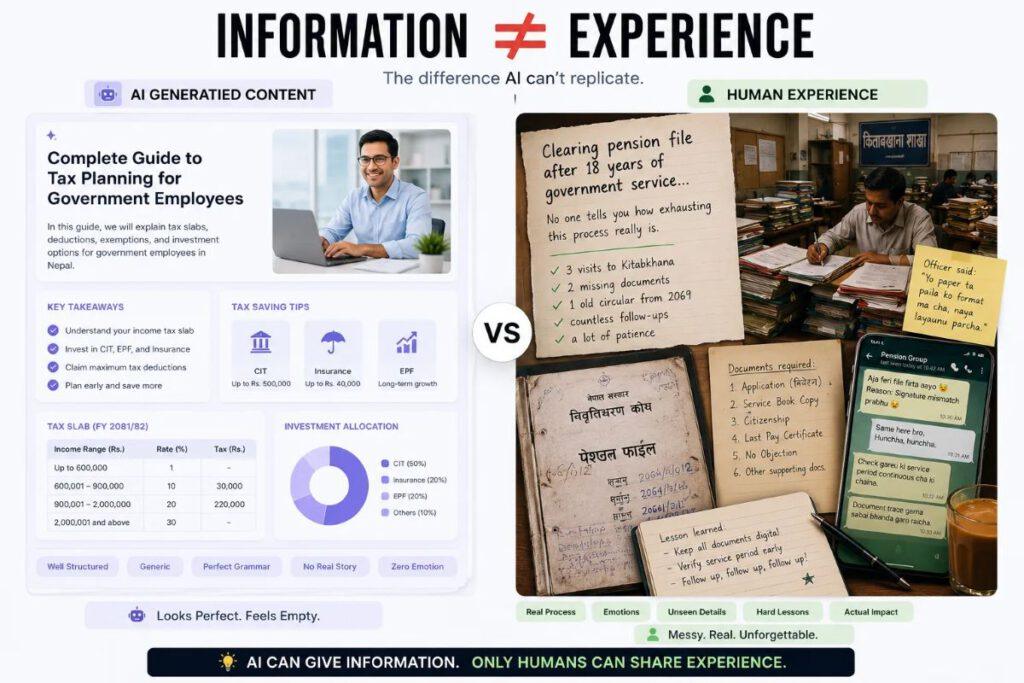
Google’s search quality guidelines emphasize experience, expertise, authoritativeness, and trustworthiness. In 2026, the most critical element is real experience.
Can an AI explain the theoretical rules of the Nepalese civil service pension? Yes. Can an AI describe the gut-wrenching anxiety of walking into the Pension Management Office, or Nibritta Bharan Kosh, in Kathmandu, dealing with missing paperwork from a 15-year-old posting in a remote district, and navigating the specific bureaucratic temperament of the desk officer? No.
To build an alive blog, your content must contain elements an LLM cannot fake:
- Original Data and Primary Sourcing: Conducting your own surveys, scraping your own clean datasets, or analyzing un-indexed local documents.
- Photographic and Multimedia Proof: Incorporating original screenshots, real-world case studies, personal audio snippets, or code repositories.
- Lived Subjective Experience: Writing from the perspective of an active practitioner who has skin in the game.
Framework 2: The Software-with-Content Strategy
One of the most powerful paradigms of modern digital publishing is the convergence of software code and written content. A blog post explaining a math formula is useful; a blog post that includes an embedded, highly reactive, hyper-localized web utility that calculates that formula instantly is an unshakeable asset.
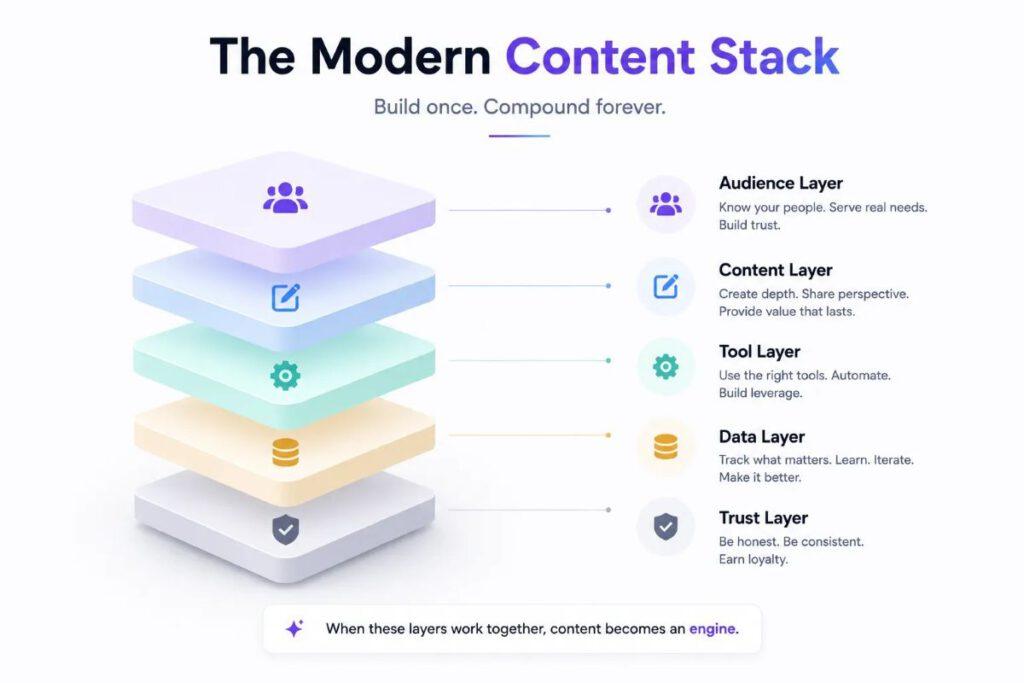
This is why specialized calculators, dynamic matrices, and interactive data visualizers are incredibly resilient. When you combine deep, authoritative editorial guides with functional web tooling, you create a dual-threat mechanism:
- The interactive tool earns natural, high-authority editorial backlinks from users who share it as a resource.
- The written content around the tool provides the semantic context that search engines require to understand the tool’s absolute utility.
Framework 3: Vertical Niche Monopoly
The era of the generalist lifestyle, tech, or finance blog is over. Success requires entering deep vertical niches, which means sub-segments of industries that are too small for massive media conglomerates to cover effectively, but deeply lucrative for an independent operator.
Instead of writing about personal finance in Nepal, you monopolize financial architecture and career trajectories for Nepalese civil servants and public sector technocrats. The audience is smaller, but their intent, engagement, and conversion rates are exponentially higher.
4. Deep-Dive Case Study: Building a High-Utility Public Sector Digital Ecosystem
To illustrate how these concepts manifest in a real-world execution strategy, let’s map out a theoretical blueprint for a modern, high-utility digital portal focused entirely on the Nepalese Public Sector Ecosystem. This blueprint demonstrates how to merge original content with interactive software tooling to build an un-AI-able moat.
The Core Problem Statement
Nepal’s public sector, comprising the Civil Service, Public School Teachers, Nepal Police, Army, and State-Owned Enterprises like Nepal Telecom or NEA, operates under highly structured, rigid, yet confusing financial laws.
Salary scales change strictly via a baseline rank matrix supplemented by accumulated annual grades, known locally as Talab Briddhi or Khaapa. Retirement pathways transition dynamically between an old Defined Benefit pension system and a newer post-2076 Contribution-Based pension system.
The official guidelines are buried in scanned PDF gazettes, called the Rajpatra, or dense legal circulars issued by the Ministry of Finance and the Inland Revenue Department. The average employee struggles to accurately project their career compensation, tax liabilities, or retirement payouts.
Architectural Component A: The Interactive Tool Layer
Instead of writing a text-heavy guide explaining these laws, the core of the platform is an array of deeply integrated web utilities built on clean JavaScript or React state engines:
1. The Dynamic Talab Maan and Grade Matrix
A programmatic calculator containing the precise baseline scales for all gazetted and non-gazetted ranks. The user selects their tier, like a Section Officer or Sakha Adhikrit, inputs their total years of continuous service, and the engine automatically references the historical Rajpatra values to calculate their exact current basic salary, incorporating accurate grade points and capping logic.
2. The Bifurcated Pension and Gratuity Calculator
An engine that maps the strict 50 vs 40 divisor rule.
// Sample conceptual routing matrix for public sector pension logic
function calculateRetirementBenefit(entryDate, serviceYears, lastBasicSalary, branchType) {
    const SEPARATION_DATE_BS = "2076-04-01"; // Shrawan 1, 2076

    // Step 1: Route to correct legislative epoch
    if (entryDate >= SEPARATION_DATE_BS) {
        return routeToContributoryScheme(entryDate, serviceYears, lastBasicSalary);
    }

    // Step 2: Enforce baseline eligibility gate for legacy pension
    if (serviceYears < 20) {
        return calculateGratuityAmount(serviceYears, lastBasicSalary);
    }

    // Step 3: Establish branch specific divisor rules
    const divisor = (branchType === 'Nijamati' || branchType === 'Teacher') ? 50 : 40;

    // Step 4: Apply the standard 6-month rounding rule logic
    const effectiveYears = applyServiceYearRounding(serviceYears);

    let monthlyPensionValue = (effectiveYears * lastBasicSalary) / divisor;

    return formatPensionReport(monthlyPensionValue);
}
The system doesn’t just display a raw number. If a user has served 14 years, the tool dynamically hides the pension dashboard and surfaces the strict statutory Gratuity calculation matrix, segmenting the payout multipliers across the 5 to 10 year, 10 to 15 year, and 15 to 20 year service brackets.
3. The Strict IRD Public Sector Tax Engine
A calculation engine that accurately separates private sector Social Security Fund rules from public sector retirement mechanisms. It implements the complex annual deduction ceilings:
Max Allowable Retirement Deduction = min(1/3 × Gross Annual Income, Rs. 500,000)
It computes the precise sequencing of contributions across the Employees Provident Fund, or Sanchaya Kosh, and the Citizen Investment Trust, also known as Nagarik Lagani Kosh. Crucially, the engine denies the baseline 1% tax slab waiver to traditional public sector workers who are not enrolled in the modern contributory plans, ensuring absolute accuracy with active IRD audit guidelines.
Architectural Component B: The Deep Editorial Layer
Surrounding these web tools is a network of highly detailed, text-based guides. This content doesn’t repeat generic definitions; it serves as documentation for real-world scenarios.
Topic Blueprint 1: Legal Tracing and Policy Breakdowns
- Focus: Writing comprehensive articles detailing updates in the annual Finance Act and how they directly alter the net take-home pay of civil servants.
- The Approach: Translating dense, bureaucratic legal text into highly scannable, human-readable breakdowns with concrete examples. For example, creating a case study tracking an active Nayab Subba moving into a Sakha Adhikrit role and mapping their subsequent tax transition.
Topic Blueprint 2: Step-by-Step Bureaucratic Workflows
- Focus: Detailed, narrative-driven walkthroughs of physical processes within government offices.
- The Approach: Step-by-step guides on how to clear your records at the Kitabkhana when transitioning from service to pension. These posts outline exactly which forms to print, which room numbers to visit in Harihar Bhawan, what common mistakes cause file rejections, and how to verify old service history records. This information is derived from real-world human experience and cannot be scraped or simulated by an AI model.
Topic Blueprint 3: Long-Term Financial Optimization
- Focus: Explaining how to optimize tax exemptions using public retirement vehicles.
- The Approach: Advanced financial strategies showing how to split voluntary investments between CIT and commercial insurance policies to maximize the Rs. 500,000 retirement cap and the Rs. 40,000 life insurance rebate concurrently.
Architectural Component C: Modern Monetization Without AdSense
A specialized, high-utility platform shouldn’t rely on ugly, intrusive display ad networks that slow down your website and pay pennies. The monetization model must match the high authority of the content:
- Qualified Professional B2B Lead Generation: Public sector employees represent highly desirable, low-risk banking clients due to their stable, guaranteed salaries. By embedding a check home loan or professional loan eligibility interface directly beneath the take-home pay calculator, the platform can capture highly qualified financial leads. These premium leads can be sold directly to local commercial banks looking to expand their loan portfolios.
- Highly Targeted Insurance Affiliate Matching: Because the tax engine calculates precisely how much extra investment an individual needs to hit their maximum annual insurance tax deduction, the system can display targeted, contextual placement links for local insurance policies right on the breakdown screen.
- Premium Workflow Exports: While the core calculators remain completely free to use online, charging a small, premium fee for exporting a beautifully formatted, multi-page Official Financial Planning PDF Report allows users to download an institutional-grade document they can take directly to their HR or finance department.
5. Summary Matrix: The Evolution of the Medium
| Operational Metric | The Legacy Model (Extinct) | The Modern Paradigm (2026 Alive) |
|---|---|---|
| Primary Traffic Source | Vulnerable Google Organic Search with 10 Blue Links | Walled Gardens, Subreddits, Direct Newsletter Feeds, and Utility Referral Shares |
| Content Generation Core | High-volume keyword targeting filled with generalized text | Authoritative, firsthand experience integrated with functional code utilities |
| Monetization Engine | Low-tier programmatic display banner ads and generic affiliate programs | B2B Lead generation, premium tool access, custom digital assets, and niche corporate sponsorships |
| Core Value Metric | Total Vanity Page Views and Arbitrary Impressions | Total Audience Retention, Email Open Rates, and Deep Tool Engagement Metrics |
6. Conclusion: The Survival of the Independent Publisher
Blogging is not dead; it has simply shed its weakest iteration. The internet is aggressively purging the middle tier of content, meaning the bland, uninspired, semi-automated articles designed for algorithms rather than humans.
If your strategy is to act as a passive aggregator of basic factual information, the generative AI models built into search engines will absorb your content and eliminate your traffic.
But if you choose to build a platform that combines deep, vertical expertise, un-deceptable human experience, and interactive web tools, you create an ecosystem that AI cannot replicate. You transition from an anonymous writer chasing search engine scraps to an essential, authoritative destination for an engaged community.
The open web is shifting from a volume game to a value game. For creators willing to build with true depth, accuracy, and technical utility, the modern internet remains a deeply viable landscape.
Discover more from Grisma
Subscribe to get the latest posts sent to your email.